Compact Block Filters
Compact Block Filters (CBF) let Bitcoin-Safe scan the blockchain without asking an Electrum server which addresses belong to you.
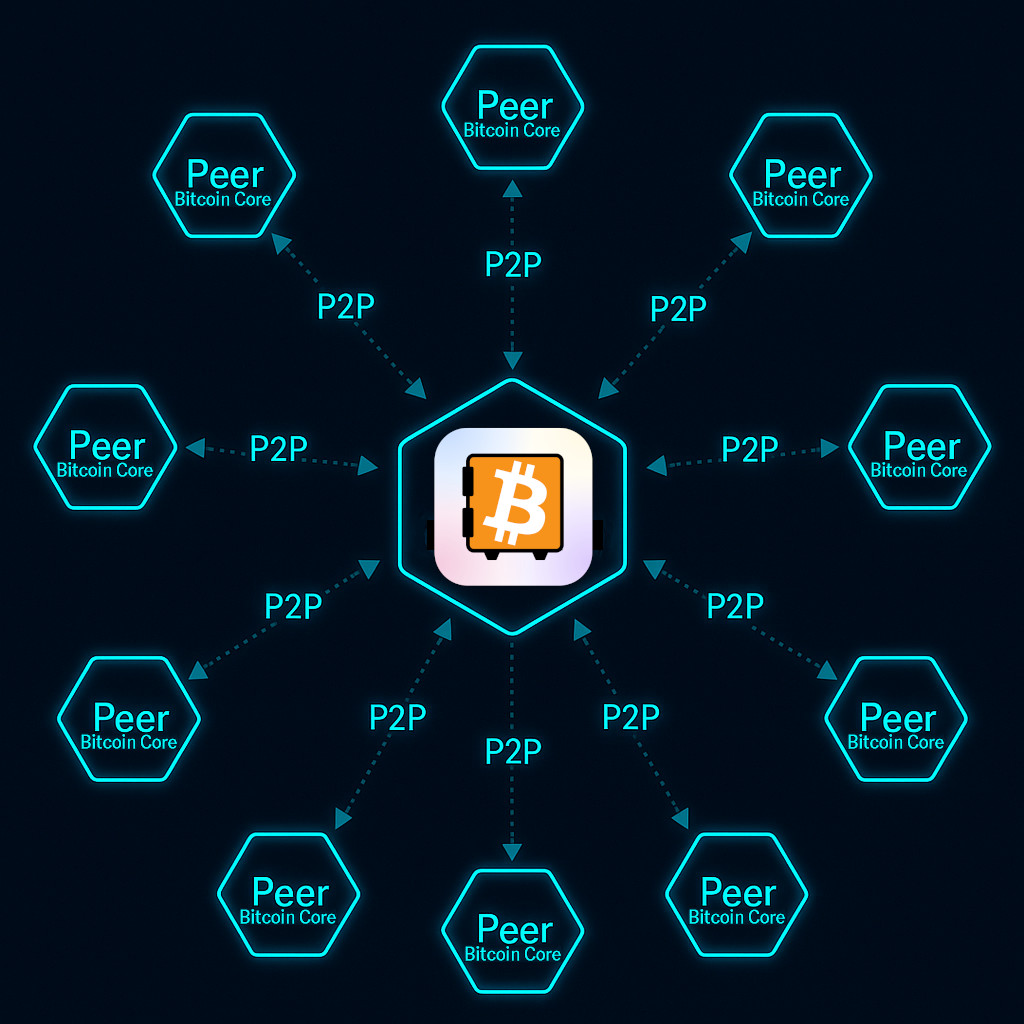
Instead of querying a central server, Bitcoin-Safe downloads a small filter for each block from random Bitcoin Core peers. Your wallet checks those filters locally and only downloads full blocks when needed.
CBF vs Electrum
| Feature | Compact Block Filters | Electrum server |
|---|---|---|
| Privacy | Good - Wallet data stays local | Bad - Server can learn your addresses and history |
| Data source | Good - Random Bitcoin Core peers | Neutral - One chosen server |
| Initial sync | Neutral - Usually slower | Good - Usually faster |
| Ongoing sync | Good - Very fast after the first sync | Good - Usually quick |
| Best for | Good - Privacy-focused users | Good - Fastest setup and recovery |
Why use CBF
- Better privacy: your wallet never asks a server about your addresses.
- No trusted indexer: Bitcoin-Safe talks directly to the Bitcoin network.
- Lightweight sync: filters are small, so you do not need the full blockchain.
What to expect
- New wallet or wallet recovery: usually takes 5 to 30 minutes for the first sync.
- Already synced wallet: usually catches up very fast, often in under 30 seconds.
- Switching from Electrum to CBF: usually also under 30 seconds.
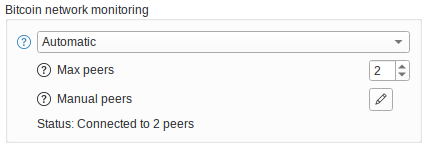
You can choose how many peers Bitcoin-Safe connects to. More peers improve redundancy, but usually increase bandwidth use and sync time. The default is 2 peers.
Unconfirmed transactions
CBF covers confirmed blocks only. To also get alerts for incoming unconfirmed payments, leave Instant transaction notifications enabled, which is the default.
Technical note
Compact block filters are defined in BIP158. Bitcoin-Safe uses the open-source Kyoto compact block filter module for BDK.
You can also use your own Bitcoin Core node as an initial peer in the Bitcoin network monitoring settings.